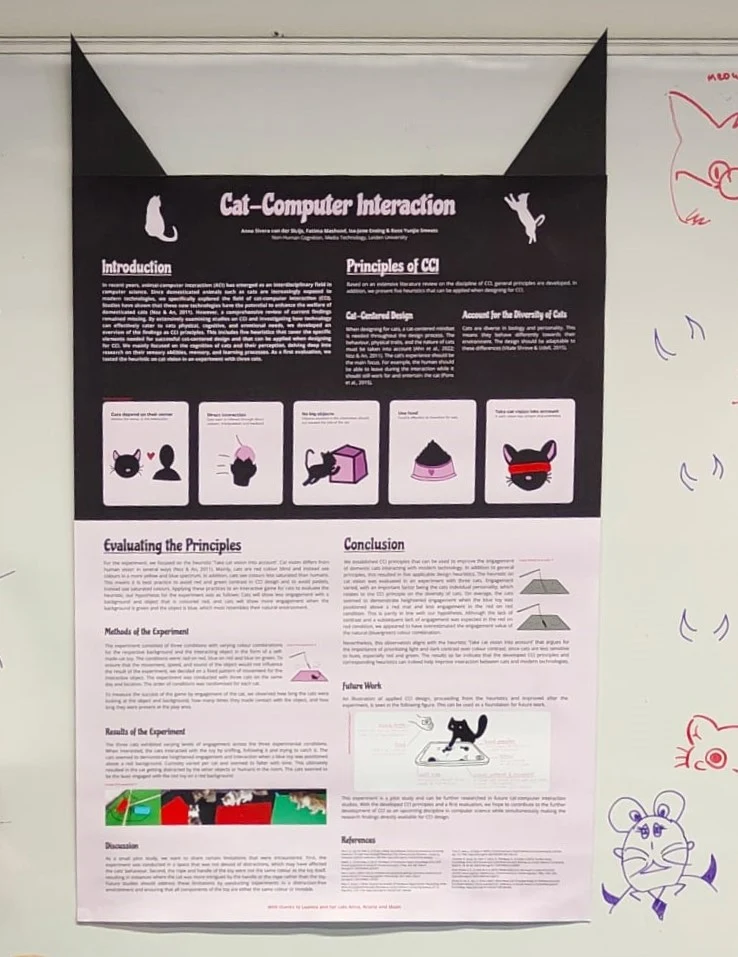
Background and question
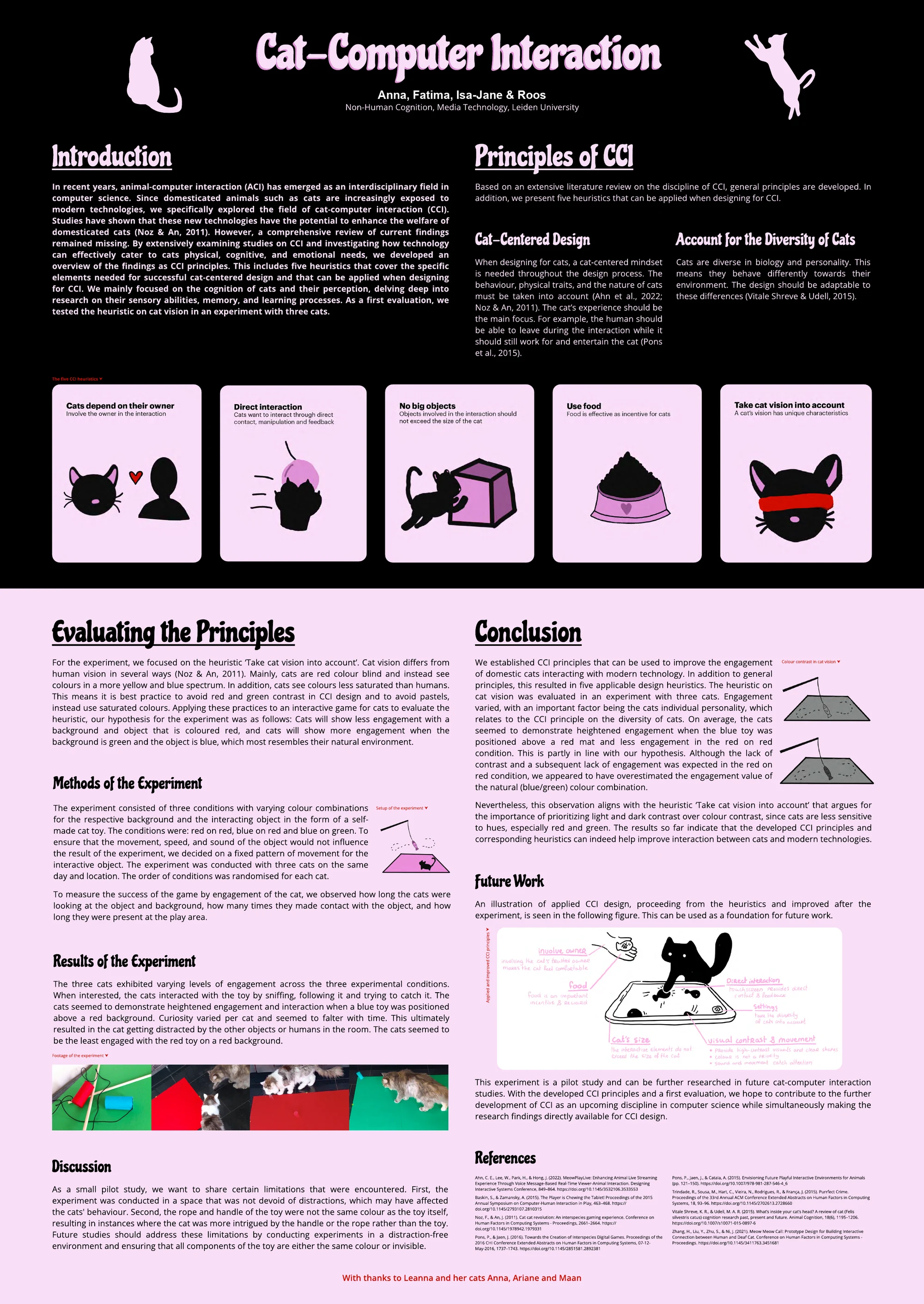
Animal-computer interaction has recently emerged as an interdisciplinary field of computer science, and domesticated cats are increasingly exposed to modern technology, which studies have shown has the potential to enhance their welfare. Secondary research on cat-computer interaction revealed limited work in the field at the time, so we directed our research towards cat cognition, perception, sensory abilities, memory and learning, and used it to develop and map out heuristics for cat-computer interaction that enhance cat engagement.
The process
Building the heuristics
We searched databases for studies on cat perception, cat-computer interaction and cat cognition, selected the relevant and recent ones, analysed them by theme and compared their insights, which led to two guiding principles. The first is a cat-centred mindset throughout the design process, with the cat’s experience as the main focus, so that an interaction keeps working for the cat after the person has left. The second is adaptability to the diversity of cats, which differ in biology and personality and therefore behave differently towards their environment. The same review helped map out five heuristics that describe the specific elements of cat-centred design.
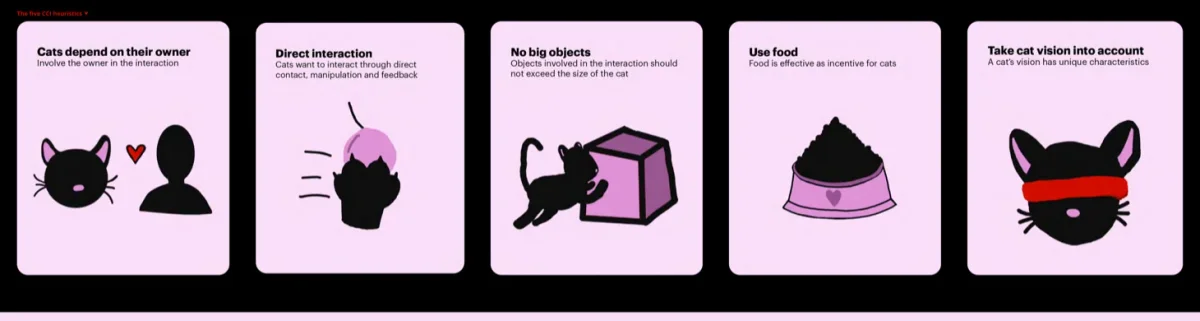
Testing the vision heuristic
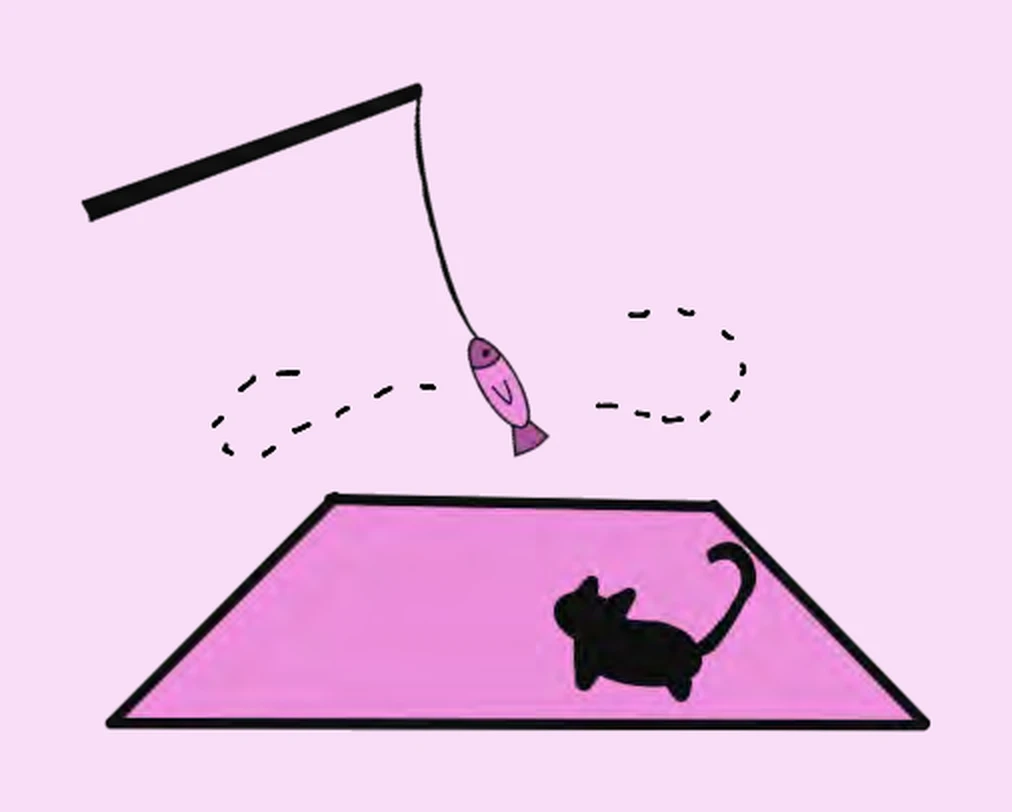
Further research revealed that cats are red colour blind and perceive colour mainly in the yellow and blue range, with colours appearing less saturated to them than to humans. Design guidance therefore favours saturated colours and avoids red and green contrast and pastels. In an interactive game for cats, we expected the red on red condition to produce the least engagement and the blue on green condition, which most resembled their natural environment, to produce the most. The three conditions were therefore a red toy on a red mat, a blue toy on a red mat and a blue toy on a green mat, and we used a self-made toy and paper mats to test three cats belonging to one owner, in the same room and on the same day, with the owner present.
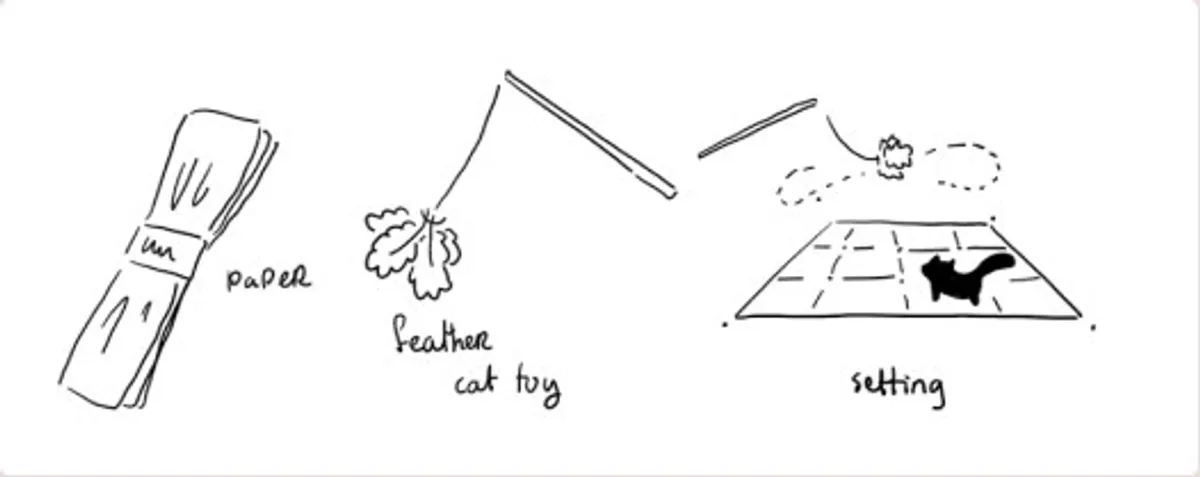
For each cat we randomised the order of the three conditions and held the toy above the mat so that scraping noise would not affect the visual comparison. A fixed movement sequence kept the toy’s speed and path consistent. Looking time, toy contacts and time spent in the play area served as three measures of engagement.
Findings
The three cats appeared to show different levels of engagement across the conditions, and individual personality was an important factor, which connects to the principle on the diversity of cats. When interested, the cats sniffed the toy, followed it and tried to catch it. On average they appeared most engaged with the blue toy on the red mat and least engaged in the red on red condition, while curiosity varied between cats and faded until other objects or people drew their attention away.
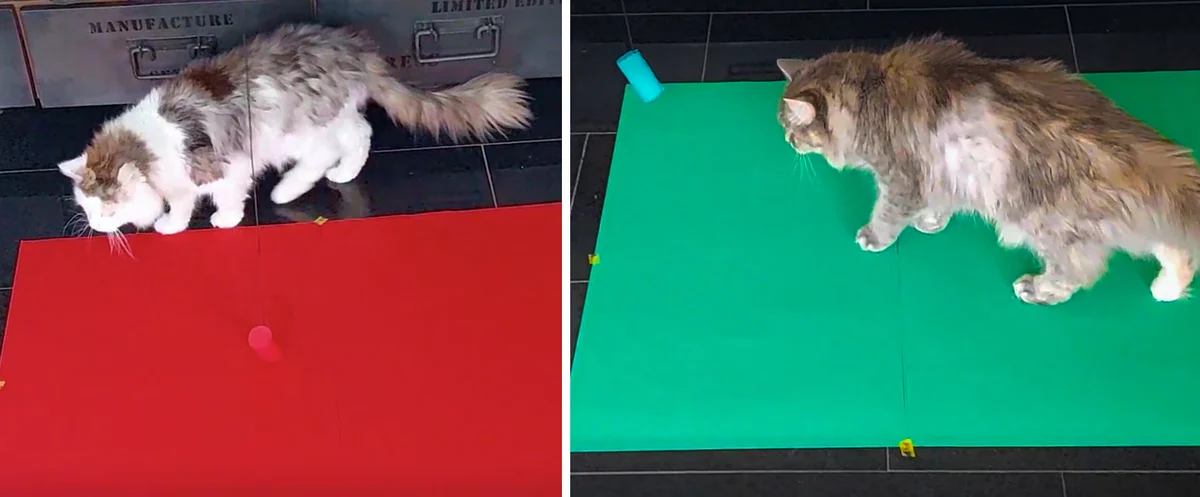
The results were partly in line with the hypothesis, since red on red drew the least engagement as expected, whereas blue on green appeared to draw less than blue on red, which suggests that we overestimated the appeal of the natural colour combination. We read this pattern as a reason to test light and dark contrast separately from hue, especially for red and green, since cats respond less to hue. Since this is an interpretation from a small study with three cats, it needs further testing before it can serve as a design rule.
Limitations and next steps
Key takeaways from the study included the observation that the room contained distractions and that the toy’s differently coloured rope and handle sometimes drew the cats’ attention, which made the colour comparison harder to isolate in a small study. A follow-up would reduce the distractions and use one colour for all visible parts of the toy or conceal them, and we could then test hue and brightness as separate variables and examine differences in personality. The poster’s applied concept carries all five heuristics forward as the starting point for a digital cat game.